Diet Soft Drinks and MS

As you may know, I was diagnosed with MS in my twenties and I overcame it with implementing a natural lifestyle and natural remedies. One of the key factors I credit to my recovery was eliminating diet soft drinks. What is the link between diet soft drinks and MS?

While I was researching how to heal, I came across Lady Cilento mentioning in her books the importance of a fresh food diet and staying away from sugar, soft drink etc. While I didn’t consume too much sugar, up to that point, I had been a big consumer of diet soft drinks. In those days consumers did not know of the potential dangers.

In high school it had become the ‘in thing’ to have a can of diet soft drink (or soda) for lunch, no food. Diet soft drinks were the new trendy beverages of choice in Australia at that time. So as teenage girls wanting to stay thin, we’d stand around in our lunch break (had no energy to do much else) slowly sipping our drink and chewing on the straws – we were so hungry!

My diet soft drink habit continued at university and was then supplemented with heavy coffee drinking, particularly at assignment and exam times. As well as overloading on saccharin, I had unknowingly become addicted to caffeine. Later when I finished university studies, I decided to wean myself off coffee even though it was then, and still now, totally socially acceptable to be a caffeine addict.

However going cold turkey was quite an unexpected and unpleasant experience. 

I had excruciating migraines for three days and all over body aches, etc. Needless to say having gone through caffeine withdrawal once, I have a very healthy respect for its powerful addictive effects. I now mostly drink organic herbal teas or an occasional water-decaffeinated organic coffee and of course lots of filtered water.

But during that same period there was little information in Australia about the dangers of consuming artificial sweeteners and diet soft drinks, and so I continued to drink them until my MS diagnosis. However I then followed Lady Cilento’s writings and eliminated them completely from my diet.

Studies since then as noted in Sally Fallon’s book, Nourishing Traditions, have indicated that the sugar, artificial sweeteners and phosphoric acid, etc., in soft drinks can have a negative impact on bones and joints. Elaine Hollingsworth in Take Control of Your Health and Escape the Sickness Industry contends that artificial sweeteners are a major cause of MS. I strongly feel my recovery was greatly assisted by eliminating the consumption of diet soft drinks. 

I had learned a lot from my research and had taken immediate action to have as many physical treatments I could manage and to clean up my diet plus supplementing with high quality vitamin C powder (with bioflavonoids). My focus and determination was very high and of course I was buoyed by a decrease in my MS symptoms from that first week of corrective treatments.

Do you notice any ill effects from drinking diet soft drinks and products with aspartame?

You can read more about my MS journey here.

Morning Movement Routine

Here’s my easy morning movement routine to get the body moving first thing.

The following exercises generally help with mobility, circulation, and lymphatic drainage and work the major muscle groups. They can be also done in the evening before bed to help release tension.

You don’t have to do all seven, you select the right exercises for you or ask your doctor or exercise health professional.

Watch the instructional video before starting the Super Seven Exercises!

1. Marching on the Spot:
Start low impact, gently marching on the spot. It’s up to you how long and fast you march and how high you raise your feet. This can also be done between each exercise to keep moving.
2. Breathe and Shake:
Stand with feet approximately hip width apart and knees slightly bent. Deep breath in and stretch your hands and arms up to the sky. As you exhale, shake out your hands above your head and then continue shaking them all the way down to your sides. Let your neck, shoulders,  and hips and knees gently move and shake and move as they want. Do at least three times. Wonderful for your circulation and lymphatic system.
3. Side Steps:
Start with small steps first to one side, then the other. As you warm up and get more fit you can make those steps bigger. When stronger and used to this activity, you may decide to bend your knees as you step out to the sides and use your arms.
4. Arm Swing:
Start with feet shoulder width apart, shoulders relaxed and arms loosely by your side. Tighten your core or stomach muscles. Slowly turn to one side and let your arms flop and follow, then slowly turn to the other side. Gradually increase your speed of turning from side to side, letting the arms move and stay loose.
5. Shoulder Rotations and Side Neck Turns:
Stand with feet apart. Stretch and lengthen through the spine (pull up through the back or crown of the head). Lift your shoulders gently up and then rotate backwards and bring shoulders down. Repeat and rotate backward up to ten times, then relax.

Relax, release and lower your shoulders, your head facing to the front. Slowly turn your head to one side towards the shoulder to your comfort level. Hold for three to ten seconds, and then slowly come back to centre. Repeat sequence with the other side.  Ideally do this sequence at least three times.
6. Air punches:
Standing balanced with feet apart, hands held up and closed into fists, punch upwards into the air above your head with one arm. Bring back to centre and then alternate with the other arm. You can also lower the arms and air punch directly to the front. May also help to relieve stress and over time extend the range of movement in the shoulders. 
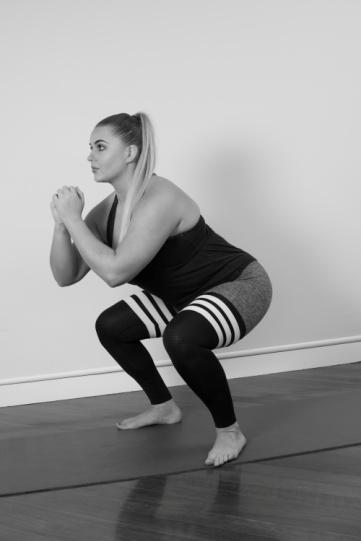
7. Air Squats or Chair Sit:
Stand with your feet hip width apart, toes pointing slightly outward and tighten your stomach or core muscles. With a comfortably straight back and upright torso, your weight balanced on your heels, bend at the hips pushing your buttocks backwards and bending the knees like you are about to sit down. Lower to a comfortable and safe level for you, keeping your hips above knee level. Your knees over but not beyond your toes.

Return slowly to your starting position.If this is a new exercise for you, don’t go too deep too soon. Place a chair behind you and sit or squat down onto it. Aim to sit down and get up without using your arms, just the strength in your legs, hips and knees. Do squats slowly to your comfort level and build up the number gradually. If there is any discomfort, stop and seek professional guidance.
                           
 squat bw.jpg

I would love to know how you go with the Morning Movement Routine. Let me know how it makes you feel!

Why you should massage your feet regularly!

There are reflexes in the feet that relate to the rest of the body. Many people get pain relief from releasing the feet. If you can’t get a professional reflexology treatment, you can help yourself by working your own feet.

Sit comfortably and roll a massage ball under the foot, to allow the muscles and tendons to flex and stretch. You can also concentrate on certain areas of the foot for different parts of the body:

  • Head and neck – the toes
  • Chest – the ball of the foot
  • Spine and back – along the inside or arch of the foot from heel to big toe
  • Stomach and bowel – middle of foot, in the arch

The human foot was designed to walk on natural surfaces such as grass, sand and soil with undulations and natural cushioning. Our feet were not meant to stand all day and walk on hard surfaces such as concrete, tiles and bitumen.

Wearing shoes all the time, also stops the foot from flexing, stretching and adapting to the environment so muscles become stiff and underutilised. Rolling a massage or tennis ball under the arch of the foot helps release and flex those muscles and improve circulation. Wriggle those toes, stretch and flex the feet, rotate the ankles in both directions.

Look after and maintain your feet. See a Reflexologist or Bowen Therapist for professional help if you have issues.

Regularly have a pedicure or do your own to exfoliate the layers of dead skin, trim nails and attend to calluses and corns. Some deformities in the feet come from neglect and can change the way you walk, causing further problems with ankles, knees, hips and back.

Looking after your feet helps keep you pain free!

How to Make Golden Turmeric Milk


Golden Milk is an ancient Ayurvedic drink that is great for helping inflammation. There are numerous golden milk recipes around using variations of turmeric, black pepper, coconut oil, ginger, cinnamon, honey etc.

You can make up your own golden paste which you keep in the fridge and then just use a little each time to make your golden milk.

You can also use raw turmeric and ginger (some think it’s more effective). Of course you should do your own research and find the best recipe for you but for your information, here’s a simple recipe I use: 


Golden Milk

1/4 – 1/2 teaspoon of Golden Paste

1 cup milk (can be coconut, almond or cow, preferably not homogenised)

Ginger, vanilla and/or cinnamon to taste (optional)

Honey (or natural sweetener) to taste (optional)

Preferably in a stainless steel pot, gently mix and heat to steaming (but do not boil) 1 cup of milk with up to 1/2 teaspoon of golden paste. Remove from heat and add optional vanilla, ginger, cinnamon and/or honey to taste. 

Golden Paste

1/4 cup organic turmeric powder

1/2 cup of filtered water 

1 teaspoon black pepper

3 tablespoons virgin coconut oil (cold pressed)

Preferably in a small stainless steel pot, cook the turmeric, water and black pepper until it forms a smooth paste on medium heat, stirring so it doesn’t burn. Remove from heat, cool slightly and thoroughly mix in the coconut oil. Store the golden paste in a small glass jar in the refrigerator for up to two weeks (if it develops a metallic taste, it’s been stored too long so throw it out). 

Have you tried Golden Milk before?

Homemade Mould Cleaner

Homemade mould cleaner, diy mould spray

Many households around Australia are struggling with mould at the moment due to prolonged rainfall.

This homemade mould cleaner is easy to make up and will help you get rid of mould and prevent it coming back.

Use a mask when you are cleaning mould to prevent inhaling any mould spores. It’s also recommended to use an old cloth that you dispose of after cleaning to avoid spreading the spores.

Dry the area thoroughly afterwards and try to keep your house as dry as you can. You may need to investigate further if there are any ongoing issues with leaks.

Homemade Mould Cleaner

20 drops Young Living clove essential oil

20 drops Young Living tea tree essential oil

2 capfuls of Young Living Thieves Household Cleaner

1/2 cup white vinegar

Add everything to a 500ml glass spray bottle. Top with cooled water from the kettle and shake well.


Please get in touch if you would like to learn more about Young Living products.

Recipe Credit: Jo Bogle